ADS Classification Guide
The American Dahlia Society recognizes 20 bloom forms and 15 color classifications. This visual reference helps you identify and classify any dahlia you encounter.
Bloom Forms
Each bloom form is defined by petal arrangement, petal shape, and whether the center disc is visible. Here are all 20 ADS forms.

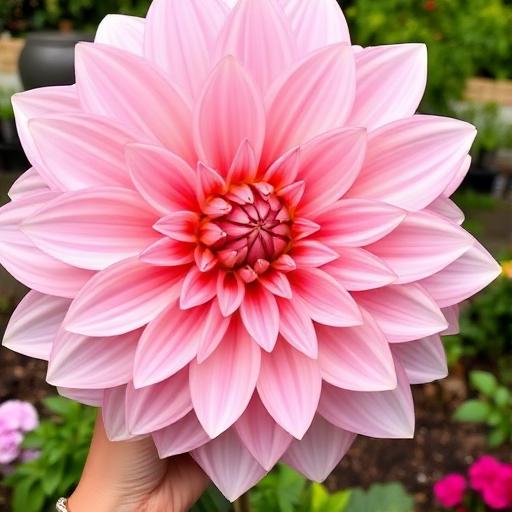
Formal Decorative (FD)
Fully double blooms with flat, broad, evenly arranged petals that curve slightly toward the stem. No open center visible.
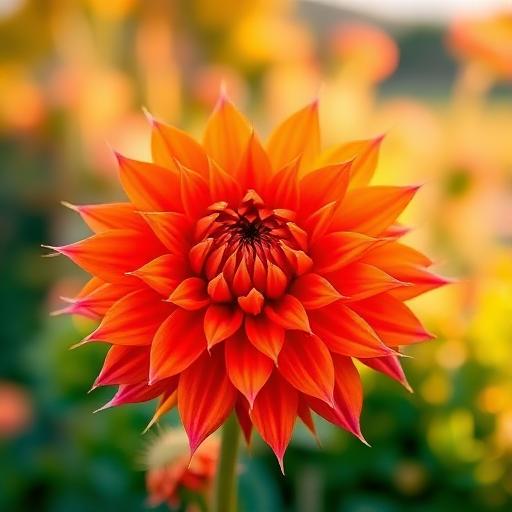
Informal Decorative (ID)
Similar to formal decorative but with irregularly arranged petals that may twist or curl, giving a more relaxed appearance.
Cactus (C)
Fully double with long, narrow, pointed petals rolled back (revolute) for more than half their length. Creates a spiky, dramatic effect.
Semi-Cactus (SC)
Broad-based petals that revolve (roll back) for less than half their length. A bridge between decorative and cactus forms.
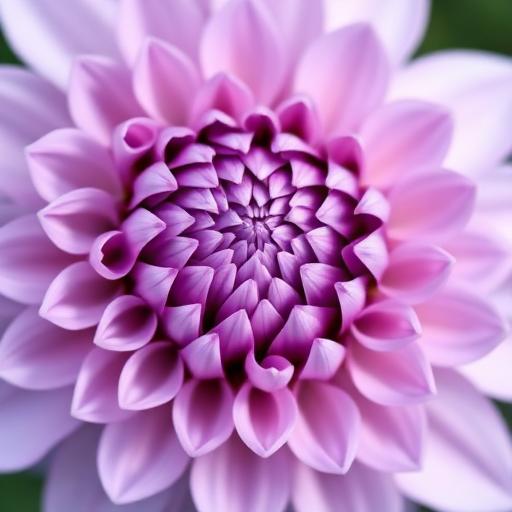
Ball (BA)
Fully double, ball-shaped blooms with spirally arranged petals that are blunt or rounded at the tip. Over 3.5 inches in diameter.
Miniature Ball (MB)
Formed like a ball, but smaller: 2 to 3.5 inches across.
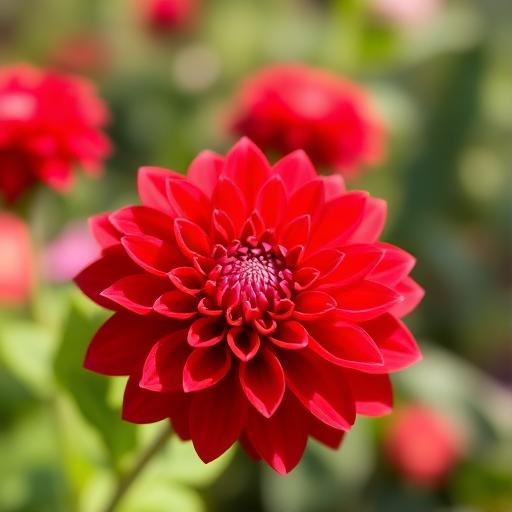
Pompon (P)
Miniature version of the ball form, fully double and globular. Blooms must be under 2 inches in diameter.
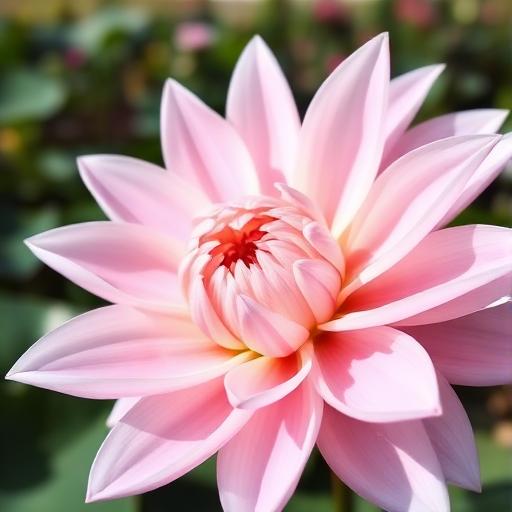
Waterlily (WL)
Fully double with broad, flat petals that are slightly curved upward, giving the appearance of a water lily floating on a pond.
Anemone (AN)
One or more outer rings of flat ray petals surrounding a dense, pincushion-like group of elongated tubular disc florets.
Collarette (CO)
A single outer ring of flat ray petals with an inner ring of shorter, contrasting-colored 'collar' petals, and an open center.
Single (S)
A single row of flat or slightly cupped petals in a flat plane around an open center, evenly overlapping with no gaps. Eight petals is the ideal. Over 2 inches across.
Orchid (O)
Single blooms where the ray petals are uniformly involute (rolled forward) for at least two-thirds of their length.
Peony (PE)
Two to five rows of ray petals surrounding an open center. A fuller version of the single form.
Stellar (ST)
Fully double with long, narrow petals, ideally pointed at the tips, that recurve toward the stem, giving a star-like look.
Incurved Cactus (IC)
Cactus-type petals that curve inward toward the center of the bloom rather than revolving backward.
Laciniated (LC)
Petals are uniformly split or fringed at the tips, giving a finely cut, feathery appearance. Can appear on various base forms.
Mignon Single (MS)
Formed like a single, but with rounded petal tips and blooms under 2 inches across.
Orchette (OT)
Like the orchid, with petals rolled in at the tips around an open center, plus a collar of short petaloids as in the collarette.
Novelty Fully Double (NX)
Fully double blooms that do not fit any other classification due to unique petal characteristics.
Novelty Open (NO)
Open-centered blooms that do not fit standard open-center classifications.
Color Classifications
The ADS uses 15 color classes to categorize dahlias. Blends, bicolors, and variegated patterns each have their own designation.
Size Classifications
Size is measured by bloom diameter. The ADS size code is part of every variety's official classification number.
Ready to explore varieties by form, size, or color?
Browse the Variety Directory